

Key Takeaways:
· Meta advertising continues to deliver strong ROI for the right brands because it combines unmatched scale, rich first‑party data, and machine‑learning optimization across the full funnel.
· Facebook and Instagram are still heavily used by adults with purchasing power—especially parents, homeowners, and decision‑makers—and Meta remains one of the most effective platforms for driving awareness, engagement, and measurable action when paired with the right creative and strategy.
You’ve heard it: “Meta doesn’t work anymore.” The reality is more nuanced. Meta still works exceptionally well—but not for everyone, and certainly not in the same way it did in 2018. The brands seeing consistent success on Meta today understand how the platform’s machine learning operates, what types of businesses it is built to serve, and which audiences continue to respond strongly across Meta’s ecosystem.

Just as importantly, Meta is far more than “just Facebook.” Meta is the parent company of Facebook, Instagram, Messenger, WhatsApp, and Threads, rebranded to Meta in 2021 to reflect a broader focus on immersive digital experiences and the future of connection.
When marketers dismiss Meta, they often overlook the scale, data depth, and intent signals that make it one of the most powerful advertising environments available.
Despite frequent claims that “no one uses Facebook anymore,” the data tells a very different story. Facebook remains one of the most resilient platforms in digital media—and for many advertisers, one of the most profitable.
Debunking the Meta Myths
According to recent Pew Research study, 71% of American adults still use Facebook, and more than half check it daily. That level of habitual usage is rare in digital media and reinforces Facebook’s role as a daily utility rather than a novelty app.
Instagram continues to grow as well, with roughly half of U.S. adults now using the platform, up significantly from just a few years ago. Threads, while still in its early stages, has begun to carve out a niche among younger users, though adoption remains modest compared to Facebook and Instagram.
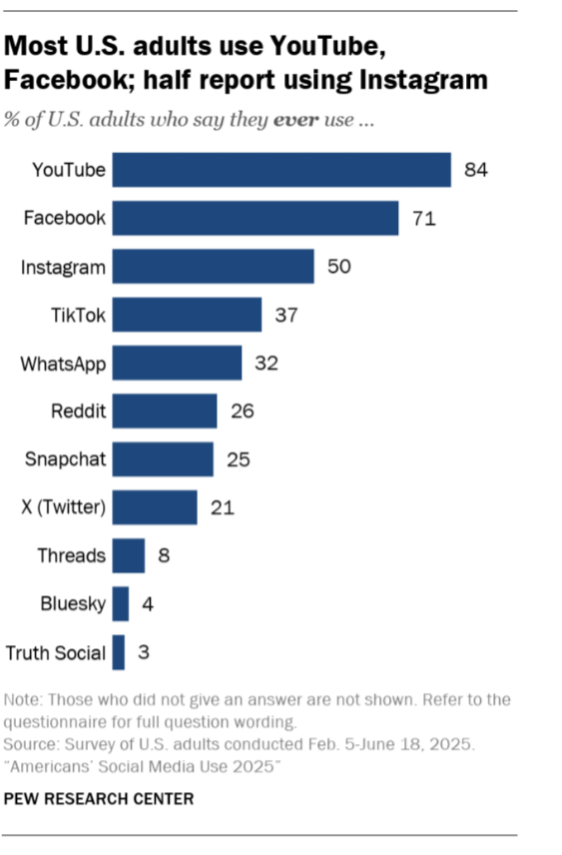
From a broader digital perspective, Facebook is currently the third most-visited website, trailing only Google and YouTube. It surpasses platforms like TikTok and Instagram in overall traffic, reinforcing its continued relevance at scale.
Globally, Facebook boasts 3.06 billion active users every month, making it the most‑used social media platform worldwide. From an advertising standpoint, this scale translates into unmatched reach, sophisticated audience modeling, and the ability to move users through the funnel—from awareness to conversion—within a single ecosystem.
In 2024, Facebook’s total ad revenue amounted to $164.5 billion, up from $134 billion the previous year. Brands are not abandoning Meta—they are doubling down on it.
So, if people are still using these platforms, the more important question becomes: How do we leverage Meta effectively to drive real business outcomes? Let’s dig in to the who, what, where, when and why of it all and how you can use these stats and tricks to use Meta to your advantage.
WHO Is Seeing Your Ads?
One of the biggest misconceptions around Meta is that its audience has aged out or lost purchasing power. In reality, Meta’s platforms reach some of the most valuable consumer segments available to advertisers.
Gender Breakdown
Across Meta platforms, women remain highly engaged—particularly on Facebook and Instagram.
This makes Meta especially effective for categories like retail, healthcare, education, family services, and community‑driven brands.
Age Distribution
Importantly, Facebook’s strength among adults 30+ makes it one of the best platforms for reaching homeowners, parents, professionals, and decision‑makers—audiences that often struggle to be reached efficiently on newer platforms.
Household Income & Education
Meta platforms reach across income levels, but Facebook in particular performs well with middle‑ and upper‑middle‑income households (the $30k-$100k range). Instagram skews slightly higher on household income and education, while Facebook offers scale and consistency across income brackets.
This blend allows advertisers to tailor creative and messaging by platform while maintaining unified targeting and reporting.
A Critical Audience: Moms
According to Comscore data via eMarketer, mothers in the U.S. spend more than twice as much time on Facebook as they do on TikTok. Facebook Groups are where they spend most of their time, which comes as no surprise given the popularity of things like #MomTok and other niche communities.
For advertisers in tourism, education, healthcare, family services, retail and home services, this level of engagement is invaluable.
WHAT Ads Can You Run on Meta?
Meta’s ad formats are one of its greatest strengths. Advertisers can deploy creative across nearly every stage of the funnel:

Some best practices:
Meta’s machine learning thrives on variety. Brands that test multiple creatives, formats, and messaging angles consistently outperform those that rely on a single asset or concept.
WHERE Do Meta Ads Run?
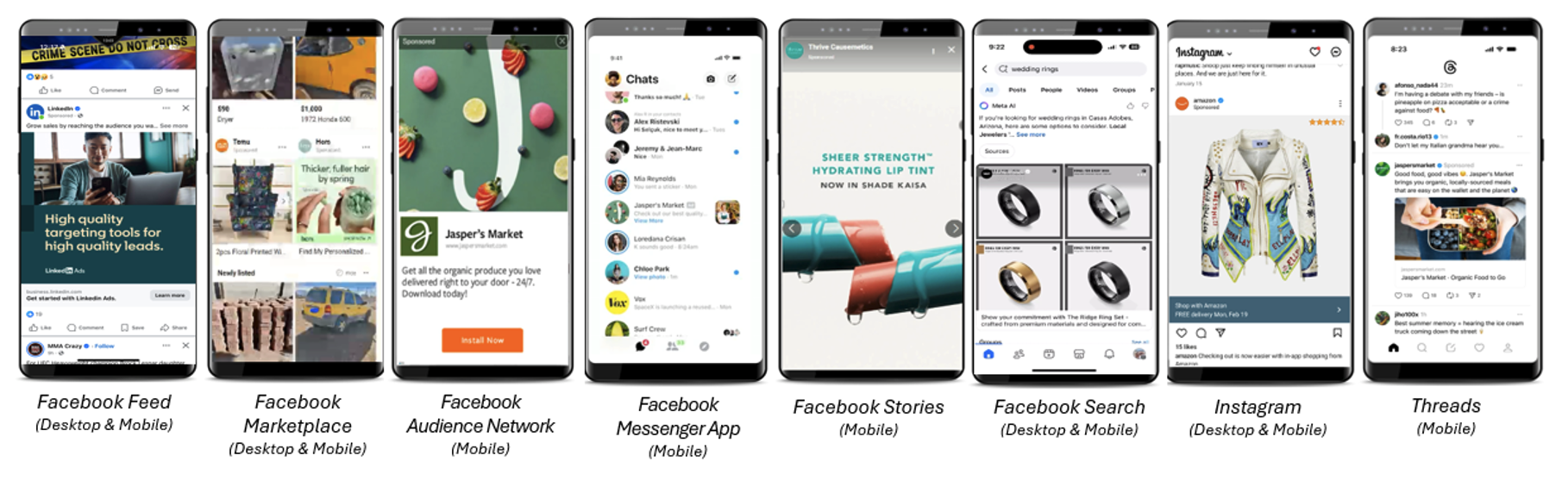
Meta ads appear across Facebook and Instagram feeds, Stories, Reels, Messenger, and Audience Network placements. This cross‑placement delivery allows Meta’s algorithm to optimize toward the placements and environments most likely to drive results.
From a commerce standpoint, eMarketer reports that U.S. adults were more likely to make purchases directly on Facebook than on Instagram in 2025, though TikTok Shop has surged ahead in social commerce adoption. That being said, Facebook Marketplace remains a powerful and often underutilized commerce channel of its own.
WHEN Is Meta the Right Advertising Channel?
Meta is not a one‑size‑fits‑all solution, but it consistently excels for certain industries and objectives. Based on recent performance, top‑performing verticals include:
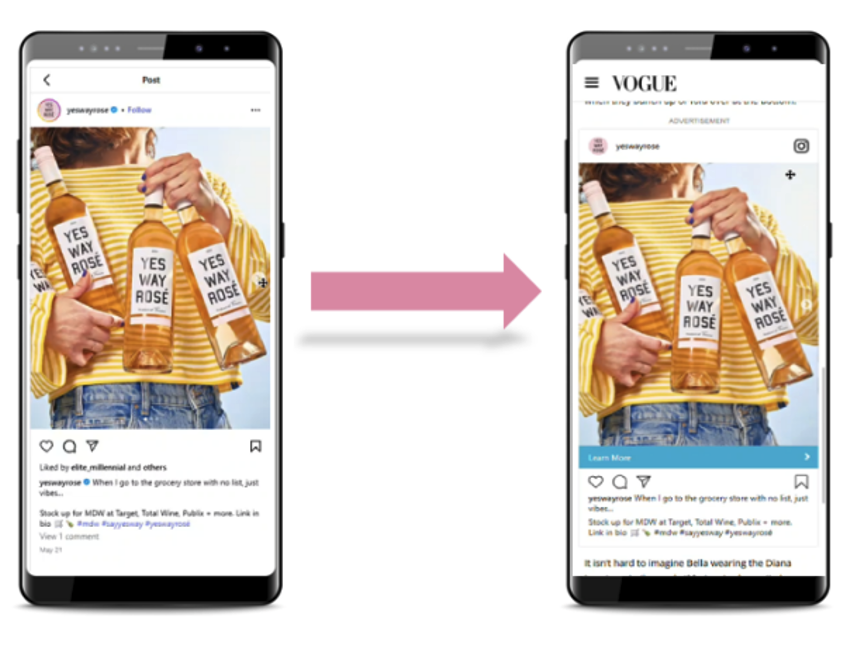
For Special Ad Categories—defined by Meta as housing, employment, financial services, and political or social issues—Meta’s targeting restrictions can limit effectiveness and viability of success.
In these cases, complementary solutions like Social Mirror often provide greater flexibility through geo‑fencing, on‑site visit tracking, and contextual targeting without the same constraints.
WHY Meta Should Be Part of Your Marketing Mix
HubSpot reported that marketers also report that Facebook has had the highest ROI of any social media platform over the past year, with 40% of respondents indicating that the platform is among the top three drivers of ROI.
Across all Vici campaigns in the past year, we saw an average click‑through rate of 1.99%, well above many industry benchmarks. Certain geographic pockets of the US—including New York, Los Angeles, Reno, Salt Lake City, and Atlanta—consistently delivered strong engagement, reinforcing Meta’s effectiveness at both scale and local levels.
Meta works best when it is treated as a system—not a single ad or audience.
How Vici Executes Meta Differently
At Vici, we don’t treat Meta as a one‑off tactic. We treat it as a performance engine that works best when layered into a broader digital ecosystem.
Building campaigns across multiple funnel stages and pairing Meta with complementary solutions like Social Mirror, CTV, and Performance Max can help close attribution gaps.
Additionally, leveraging capabilities from other advertising platforms like Mobile Conquesting gives Meta that much more allure. This works by using a “universal pixel” or cross-platform targeting which is an optional add-on to mobile conquesting to follow people who have been served mobile ads onto other ad platforms on ANY device they use.
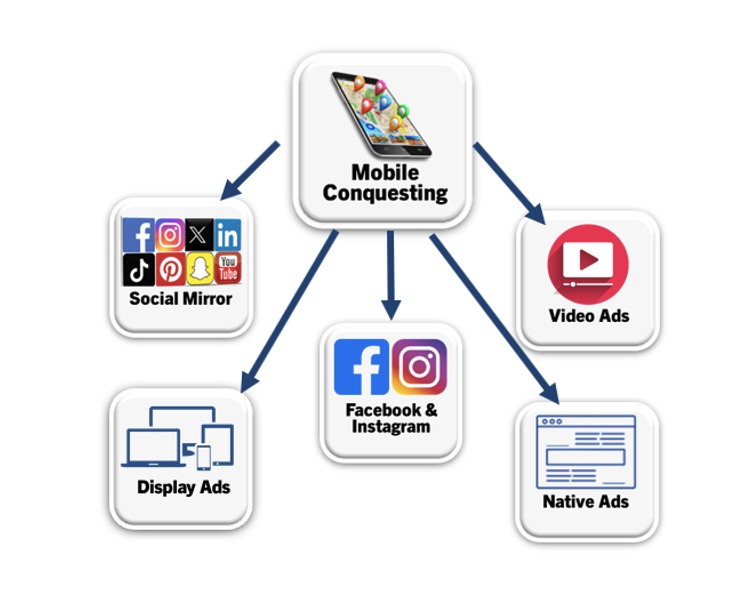
Or use the incredible customer data you’re gathering from an existing Website Visitor ID campaign, and use the Website Visitor ID Feed to automatically send your cookieless data to Meta (also available for Display, Native, Social Mirror, Video and Online Audio campaigns).
This opens the door for a higher likelihood to these users on other platforms and devices, more creative options, and potentially higher conversions. Conversions tend to be higher on larger-screened devices like tablets, desktops, and laptops.
The takeaway is simple: Meta is not outdated, it is misunderstood. For the right brands, with the right strategy, Meta remains one of the most powerful and profitable advertising platforms available today.
.png)


.png)