


With over 19 years in advertising sales, and working with many agencies, Greg is very experienced with working with clients of all sizes. He has also seen our services work first hand. Having the exact same real life experience selling digital advertising as our clients, he brings his ability to relate to everyone. Working with our partners allows him to continue to help sales teams and agencies grow their business, and at the same time, supporting the growth efforts of the end client. Greg is Google Analytics Certified.
Three Key Takeaways You’ll Get From This Article
You’ve probably heard the phrase before: “Everyone’s trying to keep up with the Joneses.” In marketing, though, it feels a little different. It’s not about bigger houses or nicer cars—it’s about better data, smarter targeting, and knowing more than the competition.
Meanwhile, most businesses are staring at their website analytics wondering the same thing:
“We’re getting traffic… but who are these people?”
That question has become even more frustrating as cookies disappear, privacy rules tighten, and traditional retargeting doesn’t provide you all the data that’s possible. The good news? The Joneses didn’t disappear—they just got smarter.
That’s where Website Visitor ID comes in.
The Problem With “Anonymous” Website Traffic
Website analytics are great at telling you what happened:
· Page views
· Sessions
· Time on site
· Bounce rate
But they fall painfully short when it comes to telling you who showed up.
And here’s the uncomfortable truth: most website visitors don’t convert on their first visit. They browse. They compare. They leave. And unless you have a way to reconnect with them, that intent quietly walks out the door.
Marketers who rely solely on form fills are only seeing a small slice of the opportunity. The rest? Completely invisible.
Website Visitor ID exists to change that.
So… What Is Website Visitor ID?
At its core, Website Visitor ID helps answer the question every marketer asks but rarely gets answered:
“Who is actually visiting my website?”
Website Visitor ID identifies a portion of your website visitors and provides usable, first-party data that can be activated across advertising, email, and direct marketing channels.
Depending on the match, that data can include:
· First and last name
· Verified email address
· Physical mailing address
· Household income and demographic insights
· Industry and B2B indicators
· Pages visited and behavioral signals
Instead of guessing who your audience is, you’re working with real-world insights—refreshed daily and ready to use.
How Website Visitor ID Works (Without Being Creepy)
On the surface, Website Visitor ID sounds simple. Behind the scenes, it’s anything but.
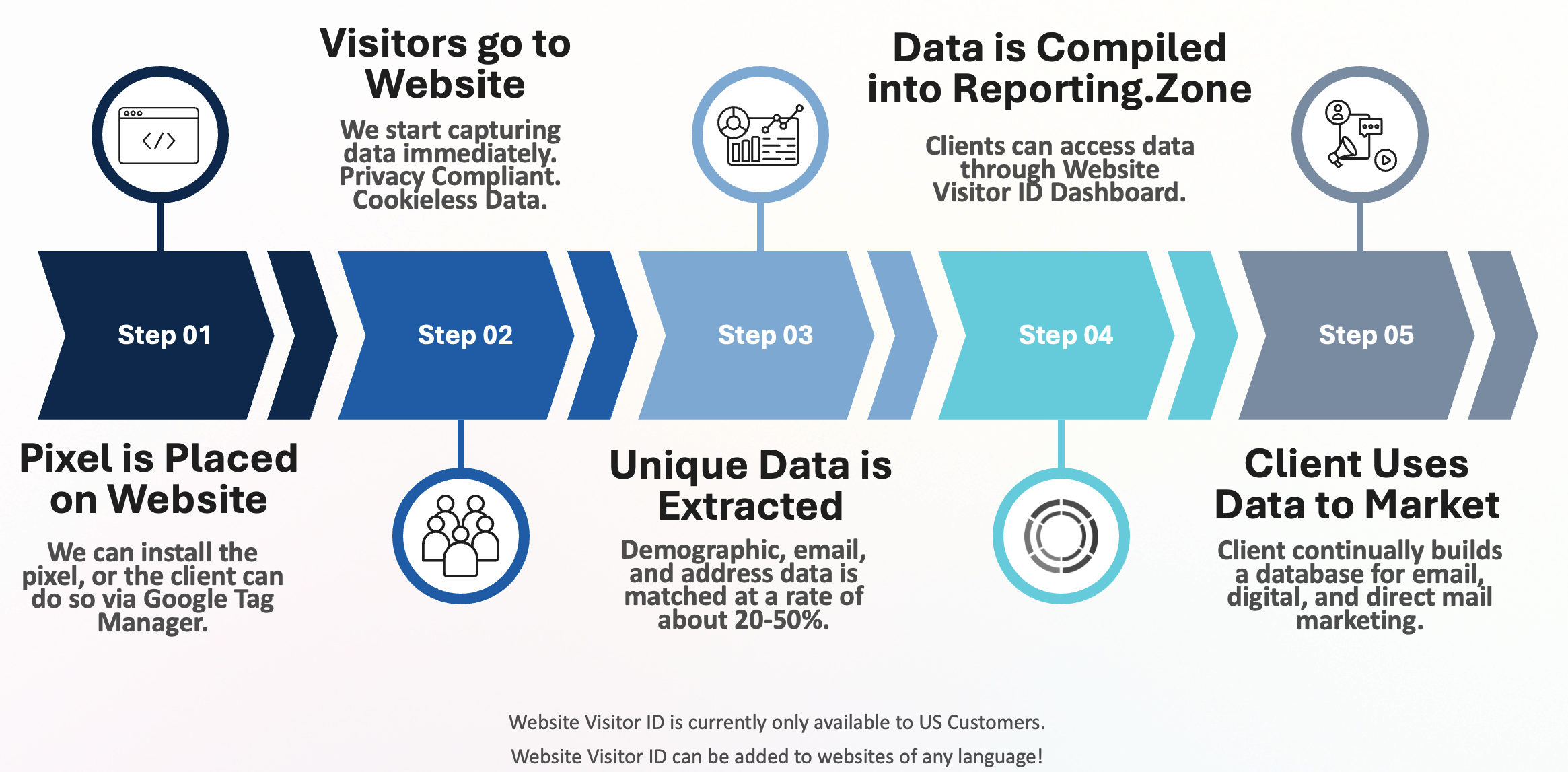
Step 1: A Pixel Is Placed on Your Website
A container tag (or pixel) is installed—either directly or through Google Tag Manager. Once live, it begins capturing non-cookie digital signals immediately.
No third-party cookies. No browser tracking tricks.
Step 2: Visitors Land on Your Site
As visitors browse your site, signals like IP address, timestamp, and device-level metadata are collected.
Step 3: Identity Matching Happens
Licensed data providers look for matching clues across large, privacy-compliant databases. Typical match rates range from 20–50%, depending on traffic and visitor behavior.
Step 4: Data Is Secured and Verified
If a match is found, the data is encrypted, securely transferred, and passed through email verification systems. Invalid or risky emails never make it into reporting.
Step 5: Data Appears in Your Dashboard
The final, verified data flows into a centralized dashboard where marketers can view, export, and activate audiences.
Yes, it’s complex. And yes, occasional reporting delays can happen. But the important part? The data continues to be collected behind the scenes, even if reporting temporarily pauses.
Built for a Cookieless, Privacy-First World
Let’s address the question everyone asks:
“Is this even legal?”
Yes. Website Visitor ID is built to comply with modern privacy standards, including:
· CCPA and CPRA
· GDPR frameworks
· NAI and DAA guidelines
· HIPAA considerations for healthcare use cases
It does not rely on cookies. It creates unique user IDs and allows consumers to opt out of marketing at any time. Data is sourced through licensed providers and privacy-compliant identity resolution methods.
In other words: powerful insight, without crossing the line.

Turning Insight Into Action (Where the Magic Happens)
Knowing who your visitors are is only half the battle. What matters is what you do next.
Website Visitor ID allows marketers to activate data across multiple channels, including:
· Display and native ads
· Video and connected TV
· Facebook and Instagram
· Online audio
· Email marketing
· Direct mail
Daily and weekly data feeds keep audiences fresh, helping campaigns stay aligned with real visitor behavior instead of outdated assumptions.
This is how anonymous traffic moves from the top of the funnel into intent and conversion territory.
Website Visitor ID vs. Traditional Retargeting
Traditional retargeting still has a place—but it has limits.
Traditional Retargeting: - Cookie-based - Anonymous users - Easy to block or delete - Limited personalization
Website Visitor ID: - Cookieless - Identified users - Privacy-compliant opt-out - Rich demographic and contact data
Used together, they create a layered strategy that reaches users both anonymously and directly.
A Real-World Example: Healthcare Marketing That Worked
A medical clinic specializing in x-ray therapy wanted to get more from its digital campaigns. Traffic was steady, but insight was limited.
After adding Website Visitor ID:
· Nearly 3,000 visitor profiles were identified in 30 days
· 80% of those profiles were matched and activated
· Custom audience strategies delivered a 0.31% CTR
· Appointments increased—and the strategy expanded to additional locations
Better data didn’t just improve performance—it changed how the clinic approached growth.
Who Benefits Most From Website Visitor ID?
Website Visitor ID is especially effective for:
· Businesses with high traffic but low form fills
· Healthcare and professional services
· Home services and local brands
· B2B organizations targeting decision-makers
· Marketers who want more accountability from their ad spend
If people are visiting your site but not raising their hand, this fills the gap.
The Bottom Line
The Joneses aren’t winning because they have more traffic—they’re winning because they know more about the traffic they already have.
Website Visitor ID helps businesses stop guessing, stop wasting opportunity, and start turning anonymous website visits into actionable marketing intelligence.
Because in today’s marketing world, the real advantage isn’t keeping up—it’s knowing exactly who you’re marketing to.
.png)

